

 Instagram
 Facebook
 LinkedIn
The Art of Mise en Place
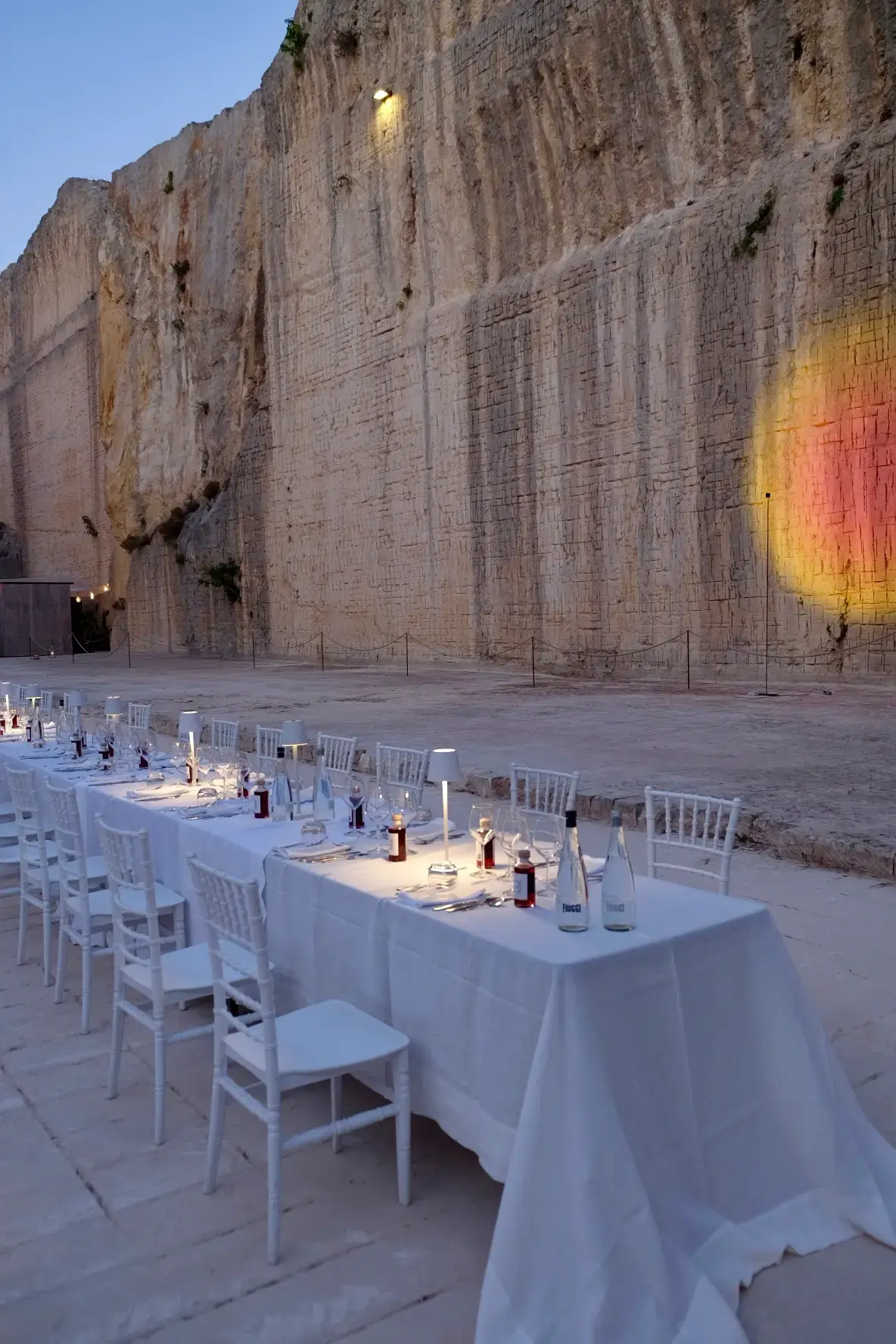
The French expression mise en place (literally “putting in place”) refers to everything that must be arranged before service begins. Originally confined to the strict vocabulary of professional kitchens and dining rooms, the term described the rigorous preparation of ingredients, utensils, and tableware required to ensure a smooth, prompt, and seamless dining service.
As fine dining and the art of entertaining evolved, mise en place took on a far broader meaning. It was no longer enough for every element simply to be in its place—it had to be arranged with intention and style.
Today, mise en place extends well beyond dining logistics. It has become the art of crafting an atmosphere and making guests feel genuinely welcomed through meticulous attention to every single detail.
Modern Mise en Place: the new luxury is balance
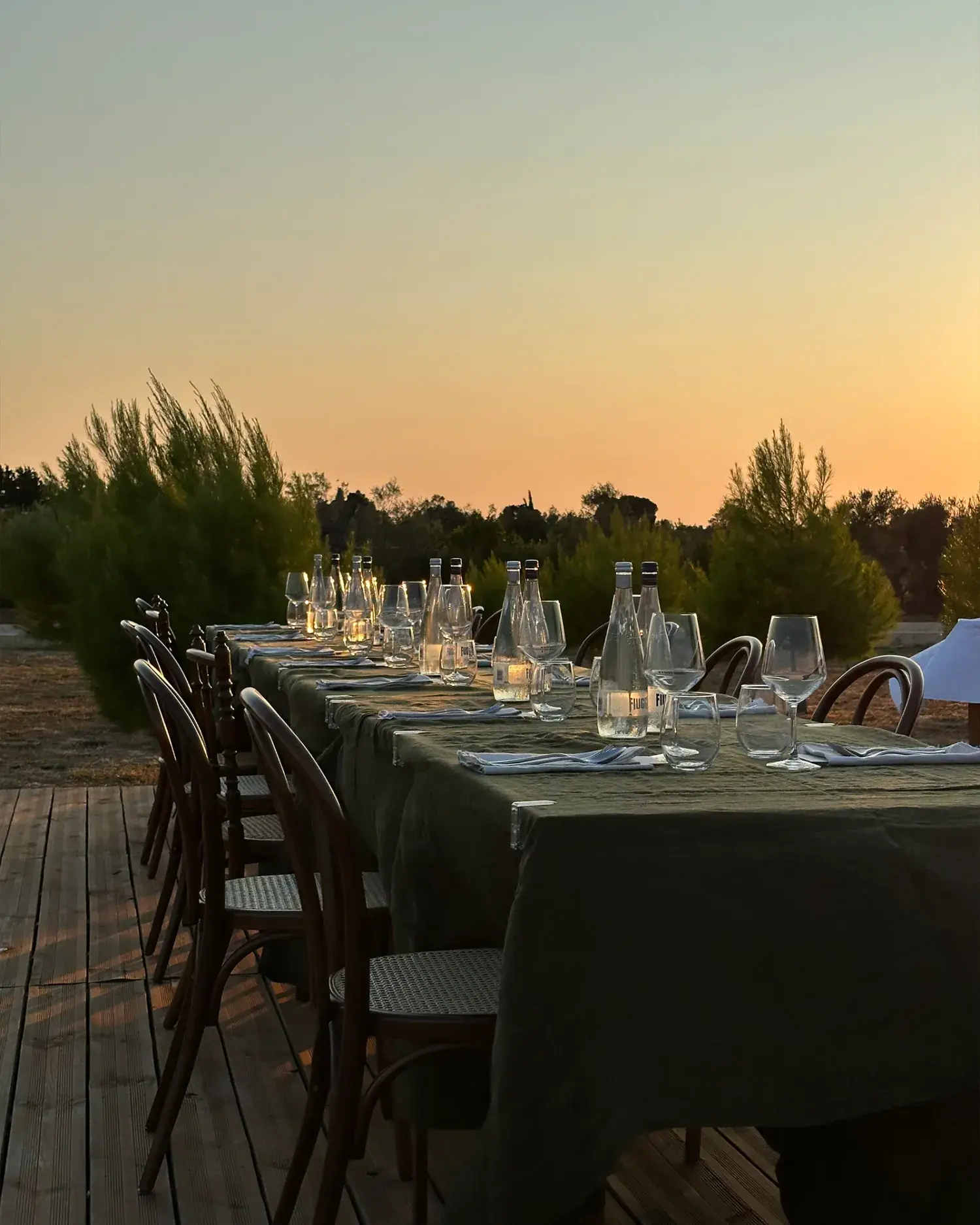
For a long time, dressing the table for special occasions meant leaning into abundance: multi-piece dinner sets, heavy crystal glassware, silverware, elaborate centerpieces, and rigid symmetry. Today, that approach has shifted. The contemporary table increasingly draws inspiration from interior and product design. Alongside more eclectic arrangements, an aesthetic rooted in subtraction has emerged. It is the principle of "less, but better"—fewer elements, thoughtfully chosen to achieve visual harmony.
Palettes of earth and stone (ivory, sand, taupe, sage) dominate, anchored by clear glass and crisp white accents. In many cases, the table is left bare, letting the natural grain of wood or stone take center stage.
Tablecloths leave behind the stiff, starched formality of the past in favor of relaxed, tactile fabrics like washed linen, celebrated for its visible weave and softly frayed edges.
Flatware follows the same design-forward philosophy: brushed stainless steel with clean lines for a modern aesthetic, warm brass or gold finishes, or sculptural, organic silhouettes that double as tabletop design accents.
Tableware leans toward the artisanal. Handcrafted ceramics, defined by subtle imperfections, replace mass-produced porcelain. Glassware with irregular or distinctive silhouettes adds character to the table.
Centerpieces are pared back to a single, understated focal point: a vase with seasonal botanicals or a single candle. Nothing more.
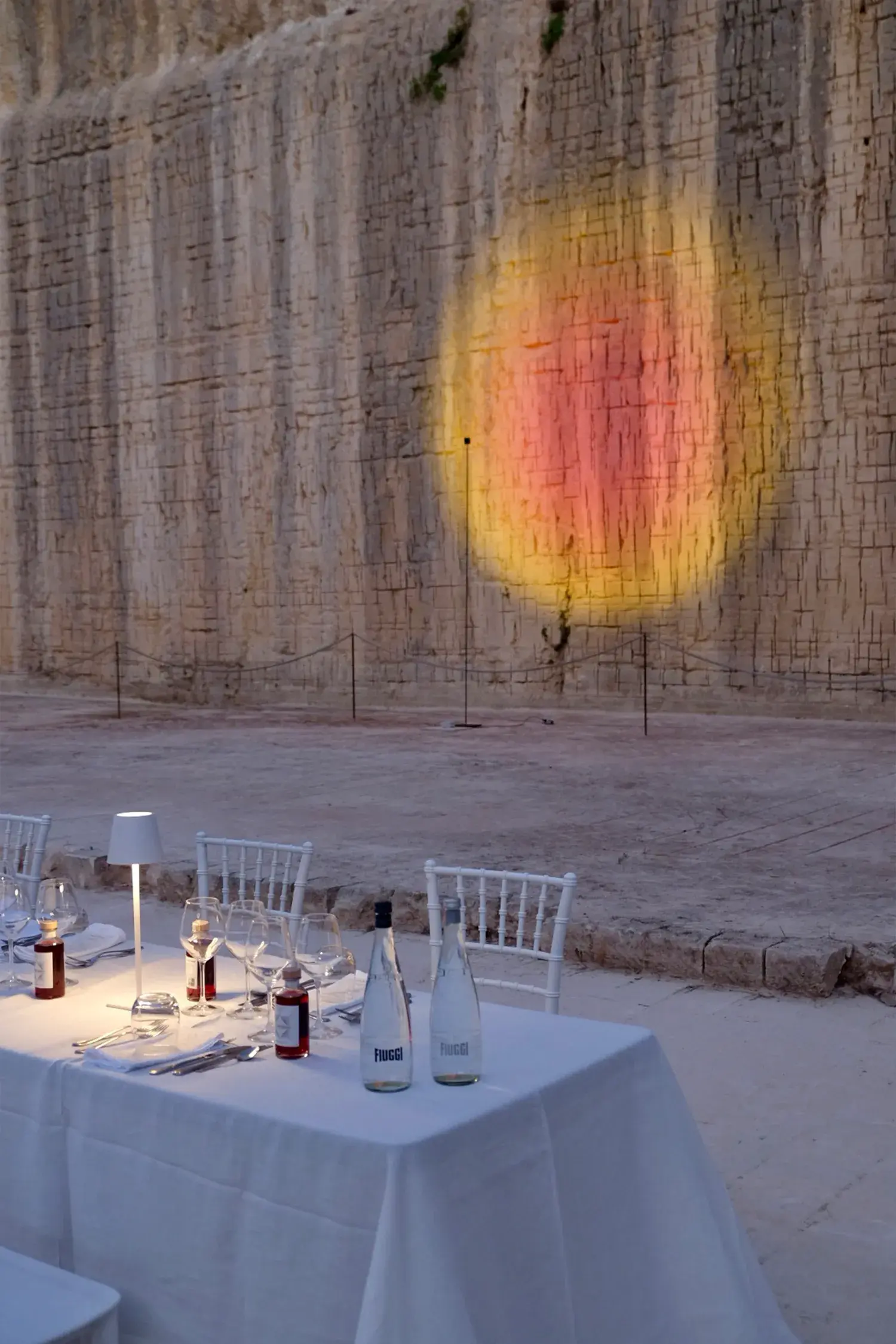
In this refined aesthetic, every object carries visual weight—including pieces once viewed as purely utilitarian, like the water bottle.
Water on the table: more than just a bottle
The water bottle is the only element that stays on the table from the start of the meal to the very end. Because of this continuous presence, its silhouette is not an afterthought; it is an integral part of the overall composition.
If you are looking for inspiration for your own table, the arrangements created by designers, restaurateurs, and lifestyle brands around the glass Luxury line offer a wealth of ideas. Here is a look at distinct styling approaches to recreate at home.
The Minimalist approach
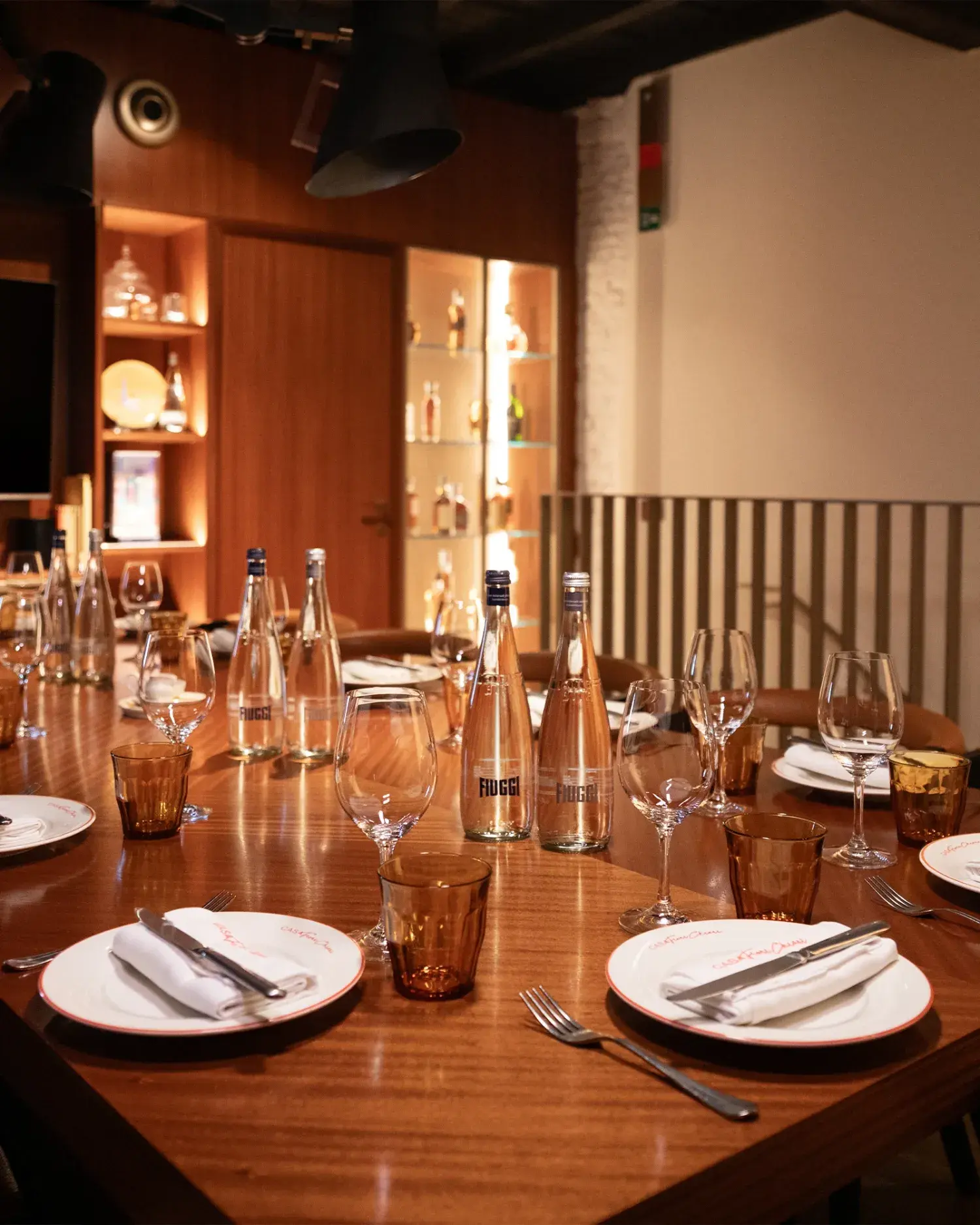
In an episode of Modernissimo on Sky Arte dedicated to table styling, designer Ferruccio Laviani and host Paolo Stella demonstrated how to curate a minimalist, sophisticated setting. Acqua Fiuggi is showcased on a bare wooden table, a simple choice with striking visual impact.
To recreate this look, leave the tabletop uncovered, select matte ceramics in neutral tones, and pare the centerpiece back to a single focal point so every piece, including the bottle, has room to breathe.
Bold color and theatrical flair
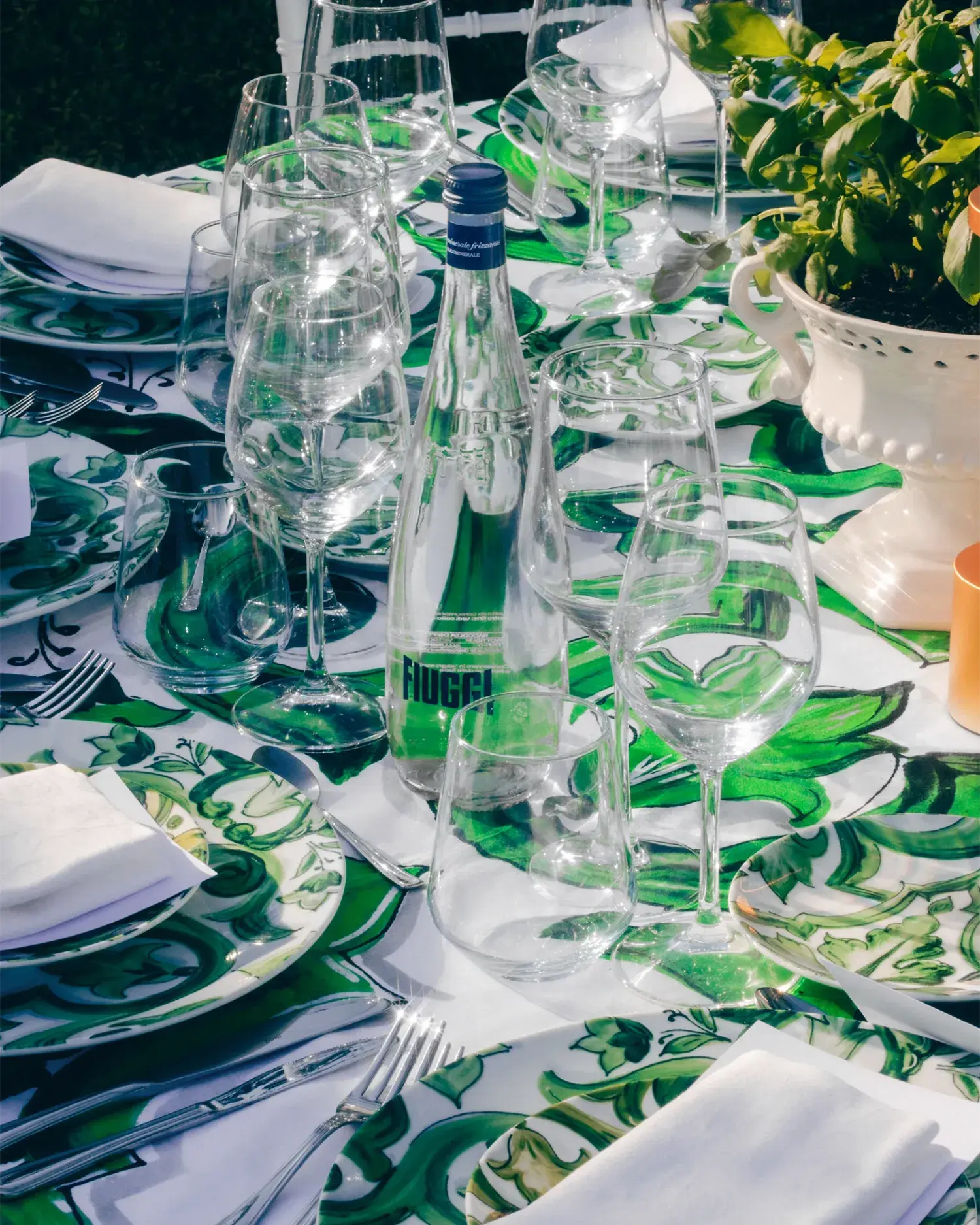
A completely different mood defined the Dolce & Gabbana gala dinners in Taormina, where Acqua Fiuggi served as the Official Water Partner for the second consecutive year. Here, the mise en place takes on a theatrical dimension: vibrant tablecloths, baroque accents, and lavish centerpieces bursting with flowers and lush foliage.
To bring this energy to your own table, start with a tablecloth in a bold hue (cobalt blue, rich red, or ochre yellow) and build the centerpiece using fresh flowers, seasonal fruit, or candles of varying heights.
In dialogue with the surroundings
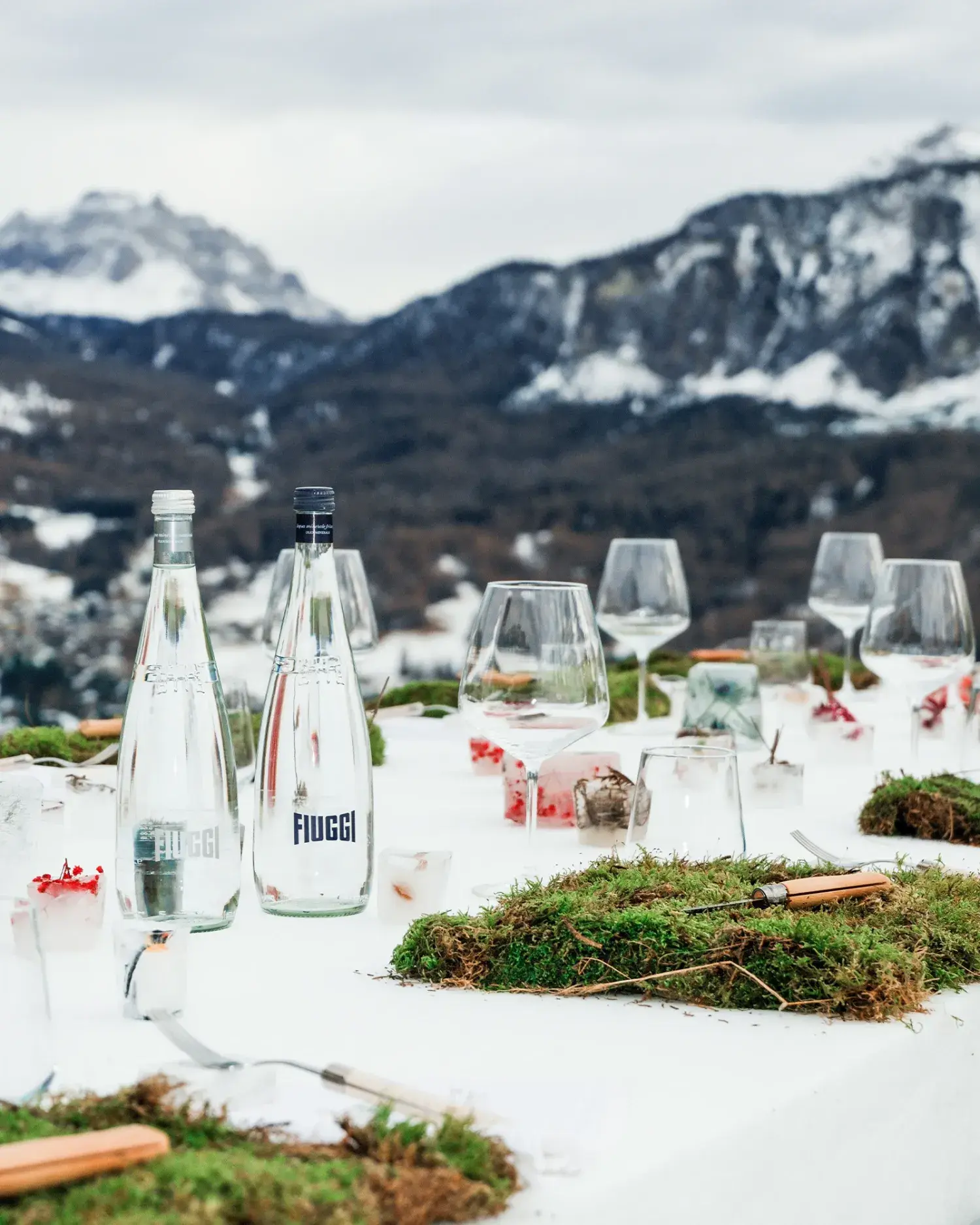
At Nest Italy’s “Tavolata” events, every table setting is born from a conversation with its environment: fine textiles, refined flatware, and curated accents are selected to echo the spirit of secret gardens, historic estates, and exceptional venues.
To recreate this effect, draw inspiration from the room where you welcome your guests or the view just outside the window: mirror the palette of your interior decor in the color of your napkins, use seasonal botanicals as natural accents, or play with ambient light by choosing materials that catch and enhance it.
Whatever your preferred aesthetic, mise en place remains above all a creative act. This thoughtful attention to detail is not reserved exclusively for grand occasions—it can effortlessly elevate your everyday routine. The new Acqua Fiuggi Everyday bottle in rPET was created with this exact spirit in mind. With its clean, minimalist design, it blends seamlessly into any home setting, opening the door to endless styling possibilities.