

 Instagram
  Facebook
  LinkedIn
 Acqua Fiuggi and the art of communicating wellbeing
Advertising has the rare gift of capturing the zeitgeist. More than any other medium, it reflects the values and desires of an era, providing a clear snapshot of how society evolves, changes its language, and redefines its aspirations.
Acqua Fiuggi's advertising campaigns are an emblematic example of this: year after year, they recount not only the evolution of the brand but also that of Italian culture and customs.
In this article, we retrace the history of Acqua Fiuggi through its historical archive: a journey through images, slogans, and campaigns that have helped shape the profile of an Italian icon.
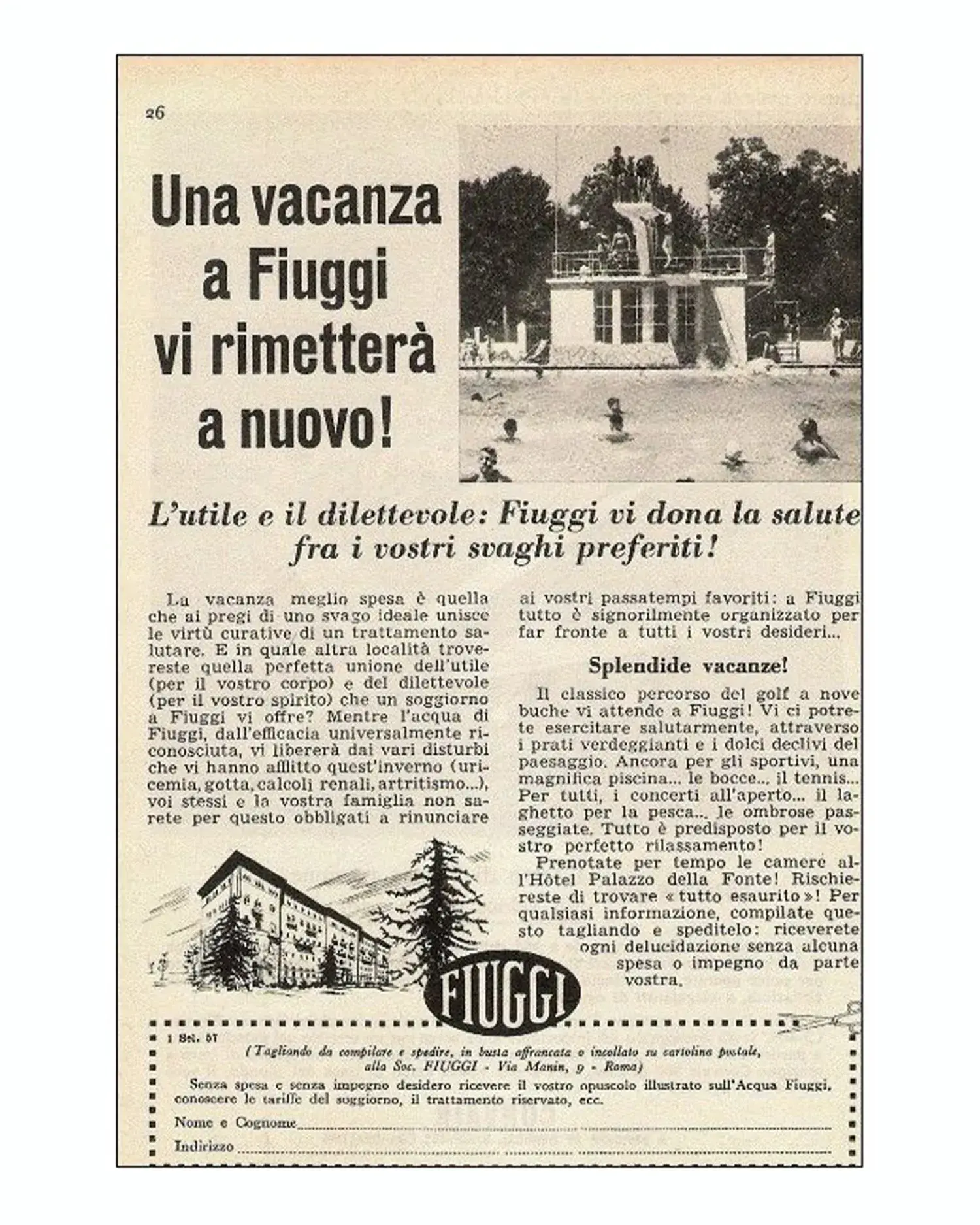
From thermal destination to daily ritual
The first historic campaigns portray the city of Fiuggi as a highly sought-after destination for summer holidays. Browsing through the ads of the 1950s, one can breathe the charm of an Italy that made vacationing an authentic ritual: a luxury suspended in time, to be savored amidst thermal treatments, the refined halls of the Grand Hotel Palazzo, and afternoons spent on the golf courses.
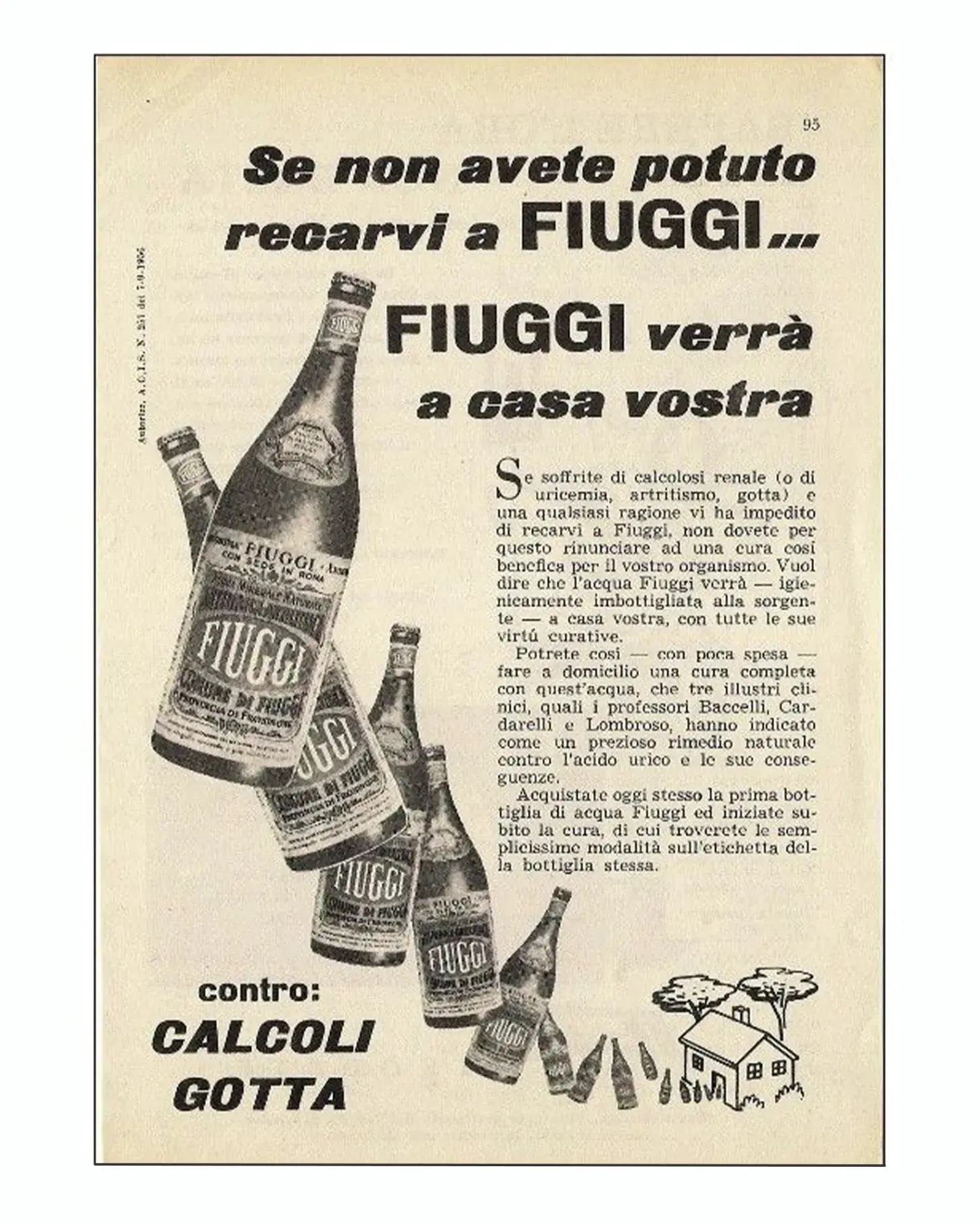
As the pace of daily life accelerated, communication shifted its perspective. It is no longer the public that has to travel to the thermal baths: now, it is the bottles of Acqua Fiuggi that cross the thresholds of Italian homes.
Bringing Acqua Fiuggi to your table no longer means just choosing high-quality water, but welcoming a fragment of that thermal experience into your everyday life.
Fiuggi keeps you young
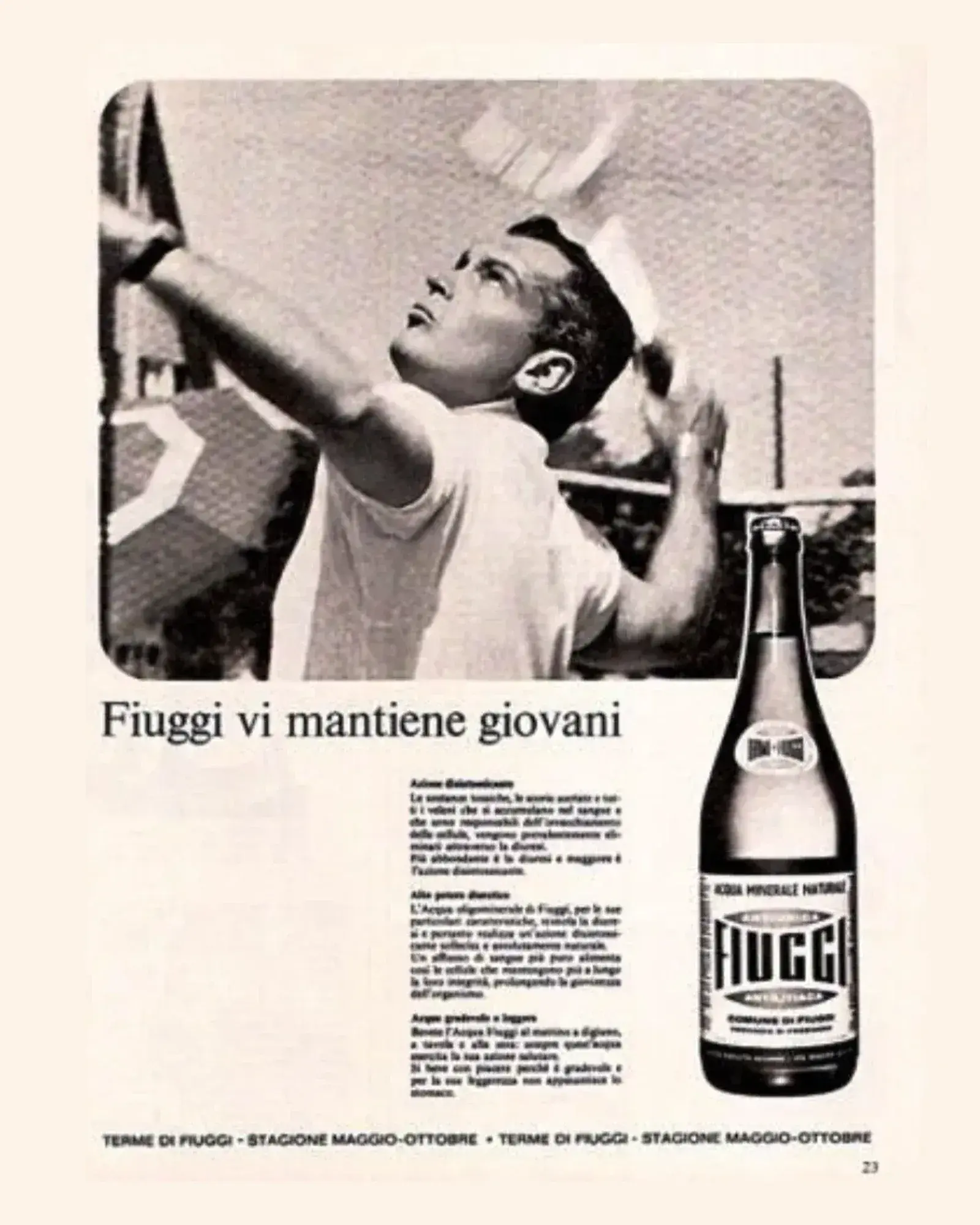
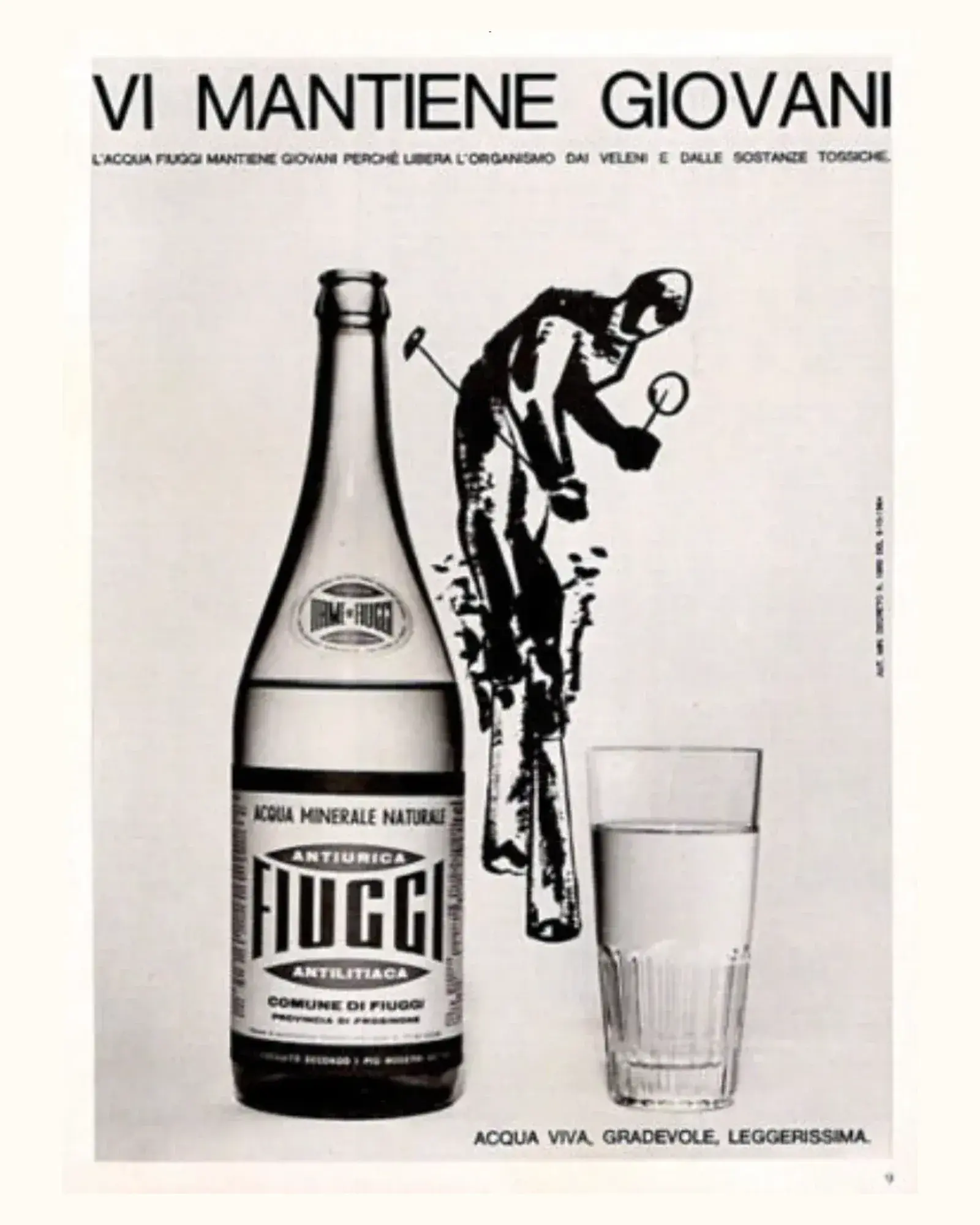
Between the 1950s and 1970s, the brand's narrative found its perfect synthesis in the famous claim, "Fiuggi vi mantiene giovani" (Fiuggi keeps you young). Not just a simple slogan, but the manifesto of an era that looks at wellbeing as a concrete promise: feeling fit, conserving energy, and living with greater lightness.
The campaigns of these years shift the focus to the qualities of the water and its ability to accompany a vital and dynamic lifestyle. The youthfulness evoked by Fiuggi is not just a matter of age, but an attitude to be sought after.
In this new vision, sport naturally enters the brand's imagery. The athletic gesture becomes a visual metaphor for purity and vitality, consecrating Acqua Fiuggi as the symbol of an active, modern life in perfect balance.
Thirst for wellbeing
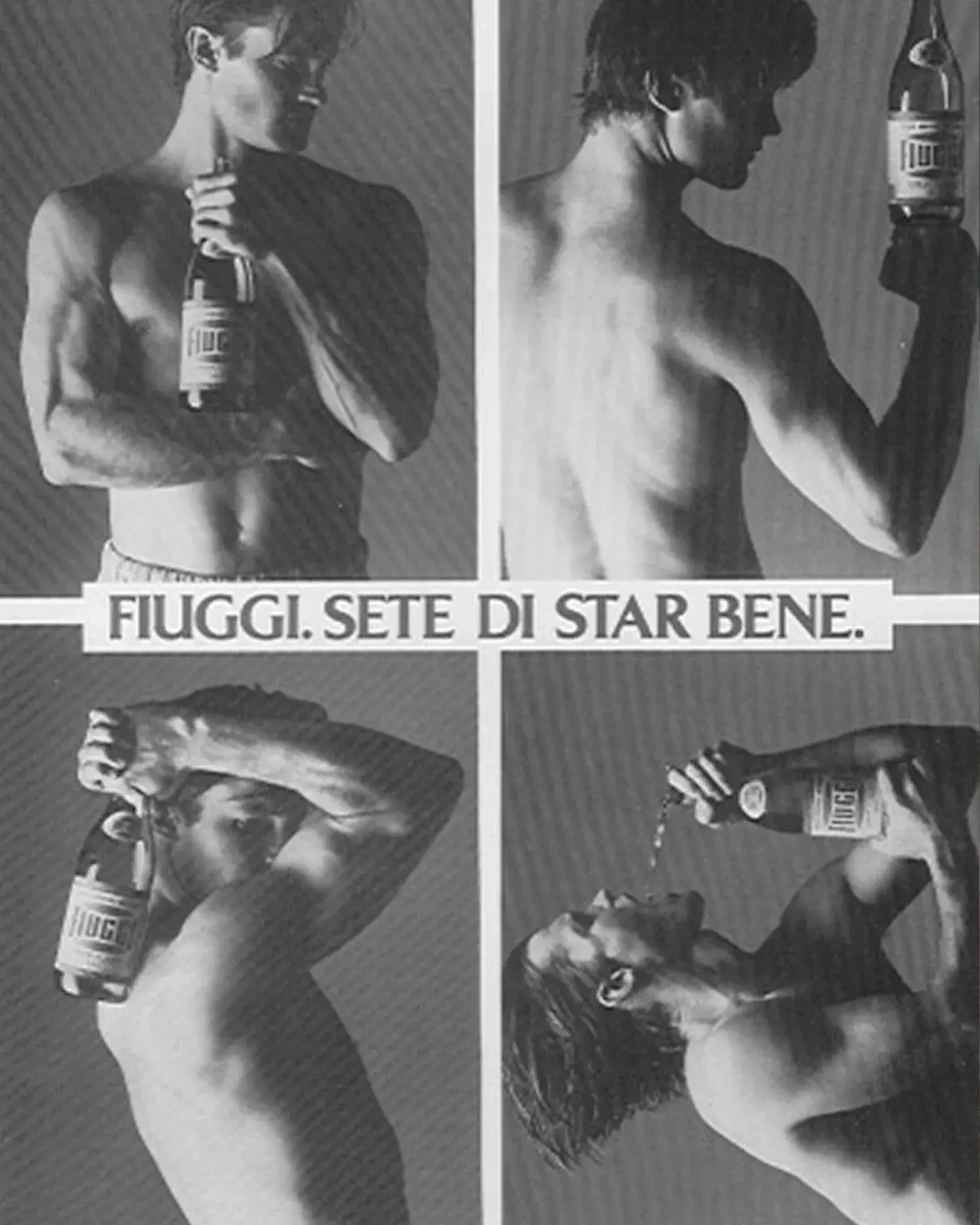
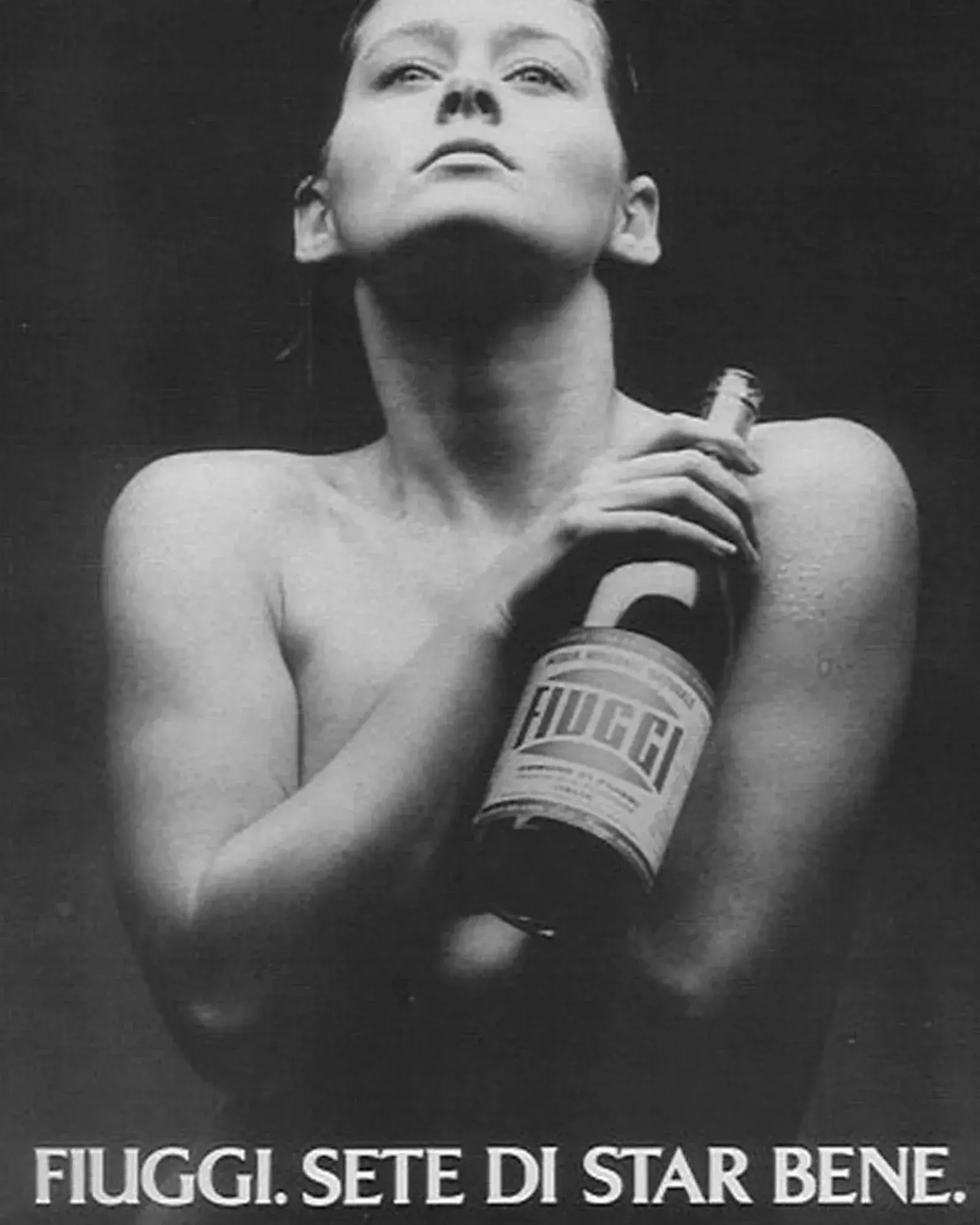
With the campaign "Fiuggi. Sete di star bene" (Fiuggi. Thirst for wellbeing), the body becomes the protagonist: athletic, essential, portrayed through highly impactful black and white shots. Thirst is no longer just a need for water, but a desire to feel good, to live in one's body with balance and naturalness.
It is a key transition: Acqua Fiuggi no longer just communicates the benefits of wellbeing; it constructs an image of it. Feeling good becomes a lifestyle.
Culture of wellbeing
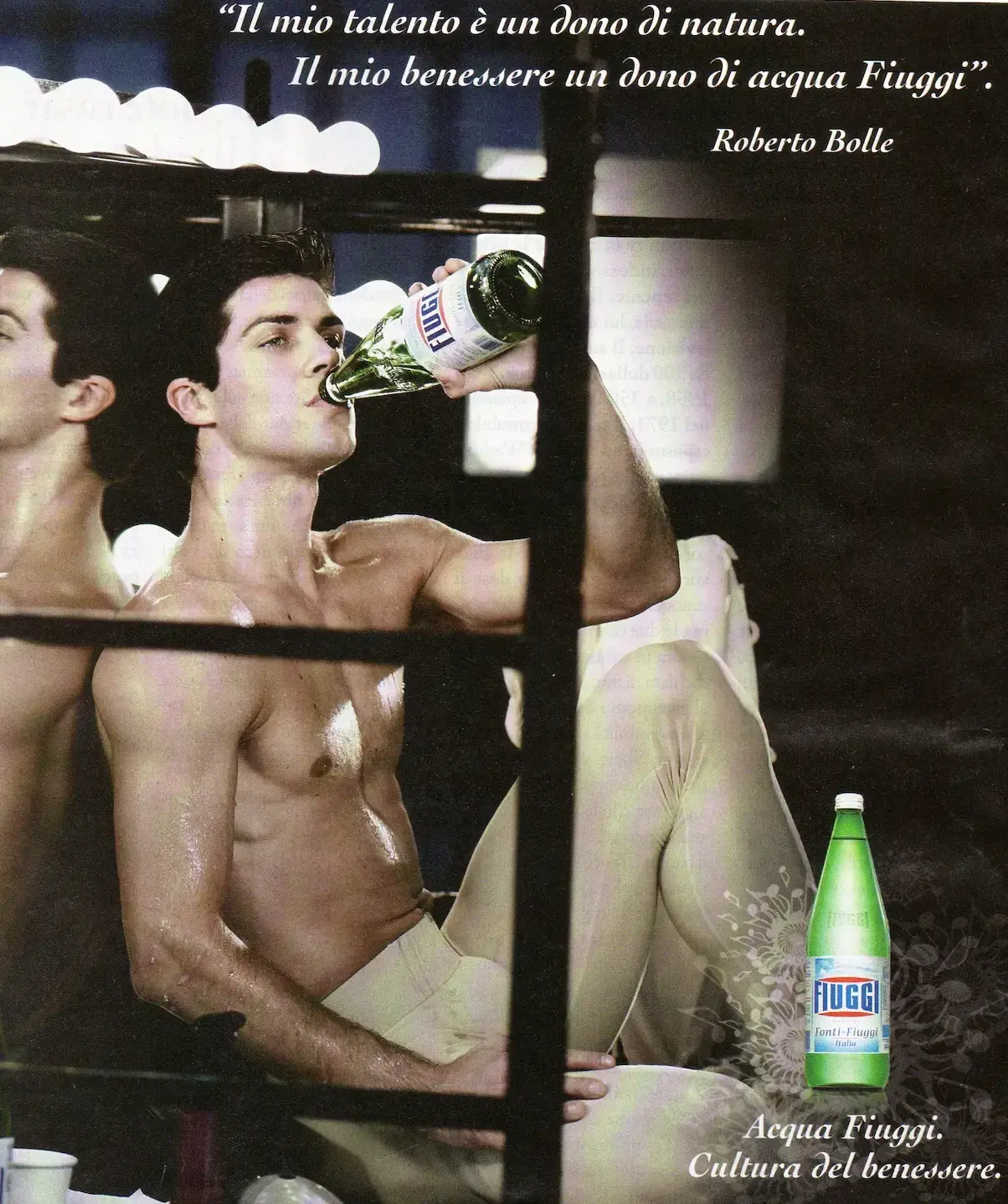
In subsequent years, this centrality of the body evolves towards a higher, almost theatrical imagery. Wellbeing is no longer portrayed solely as physical vitality, but as harmony, discipline, and grace.
The emblem of this evolution is the collaboration with Roberto Bolle. A 2008 commercial set at the Royal Palace of Caserta links Acqua Fiuggi to an imagery of art, perfection, and passion. It is no longer just about what the water does, but what the water represents: a form of luminous discipline, an essential beauty, an elegance that comes from within.
Acqua Fiuggi reflects your beauty
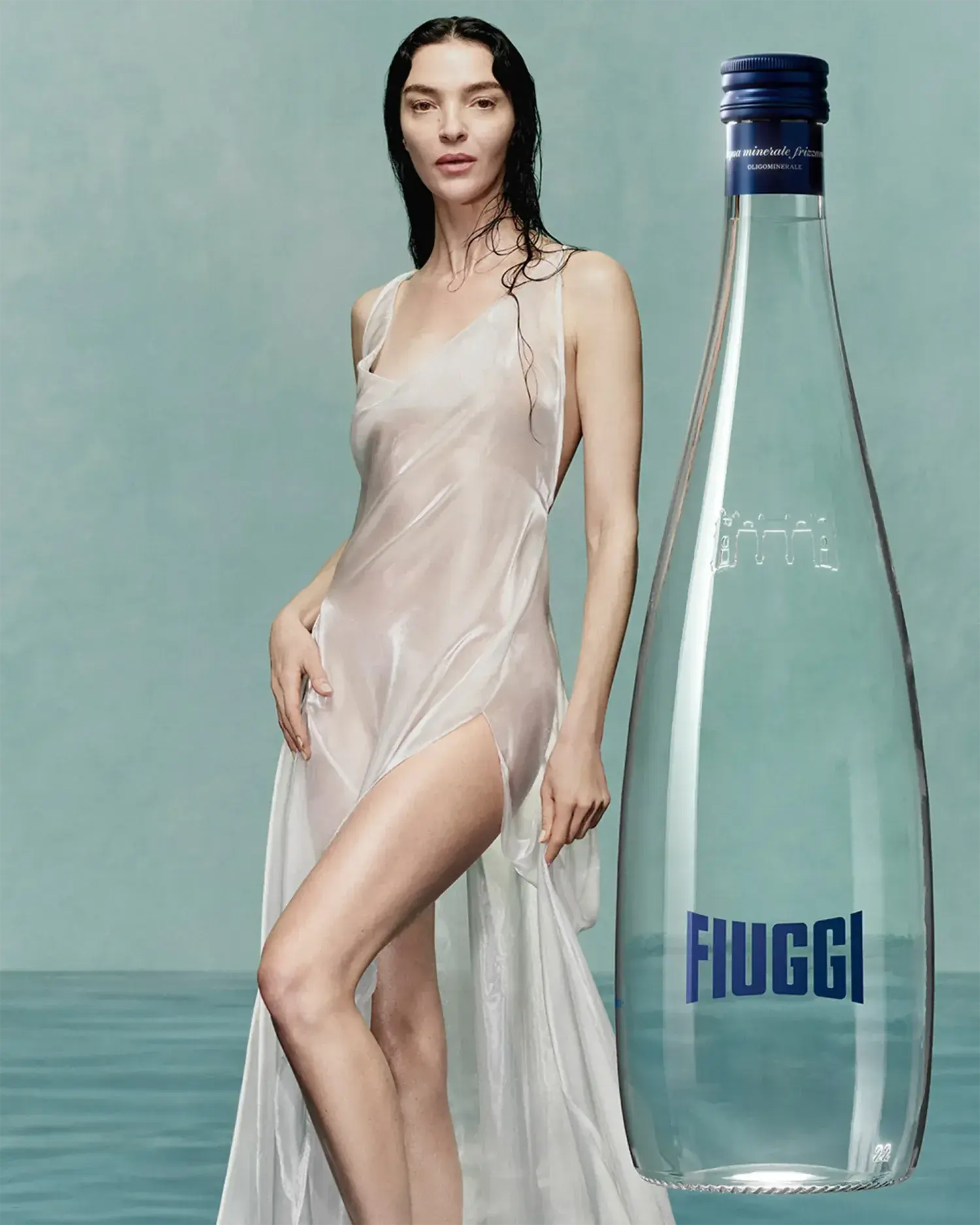
Today, Acqua Fiuggi brings this legacy into the present with the campaign "Acqua Fiuggi rispecchia la tua bellezza" (Acqua Fiuggi reflects your beauty), a visual tale that marks a new chapter in the brand's evolution. Beauty is no longer a distant ideal, nor a promise to be chased. It is something that emerges, reveals itself, and takes shape through water, light, and movement. In the campaign's images, Acqua Fiuggi becomes surface and reflection: a natural element capable of restoring a more intimate, authentic, and contemporary idea of wellbeing.
Acqua Fiuggi thus continues to share the same idea with ever-changing codes: wellbeing as a lifestyle, as a daily gesture, as a form of beauty to be recognized within oneself.